
A garage can hold a workbench, exercise equipment, and half-finished projects yet become little more than a parking space once winter arrives. Heating changes how you can use it, but choosing a unit by the number of parking bays leaves important questions unanswered. Garage heater installation needs to account for the building, the available utilities, and the activity taking place around the equipment.
Best Heating Cooling & Air helps Denver-area homeowners evaluate a permanent heating arrangement for their garage. Tell us whether you need comfortable conditions for evening projects or a lower background temperature between visits. That distinction influences equipment selection, controls, and how the finished system will operate.

The Practical Benefits of a Heated Garage
The most useful benefits of a heated garage show up in ordinary routines. You can spend longer at a workbench, prepare equipment without rushing back indoors, or use a suitable hobby area during months when the unheated building would be uncomfortable. The target temperature should reflect those activities rather than automatically match the living room.
- A dedicated heating system gives you control over garage conditions without changing the thermostat setting for the rest of the house.
- Usable winter workspace can make routine maintenance, assembly, and other appropriate indoor projects easier to schedule.
- Maintaining a suitable temperature may help protect temperature-sensitive items when their storage requirements are understood and the system remains operational.
- A permanent installation keeps the heating arrangement planned around the space, with supports, connections, and controls selected for the equipment.
Heating is not a substitute for insulation or door maintenance. Warm air escapes quickly through a large open garage door, and an uninsulated roof or poorly sealed opening adds demand between door cycles. Addressing those losses can be more useful than selecting a larger heater to overcome them.
It also does not turn a garage into approved living accommodation or provide ventilation for vehicle exhaust and workshop contaminants. The heating design should suit the garage’s actual use while preserving its required separation from the home.
Types of Garage Heating Systems We Install
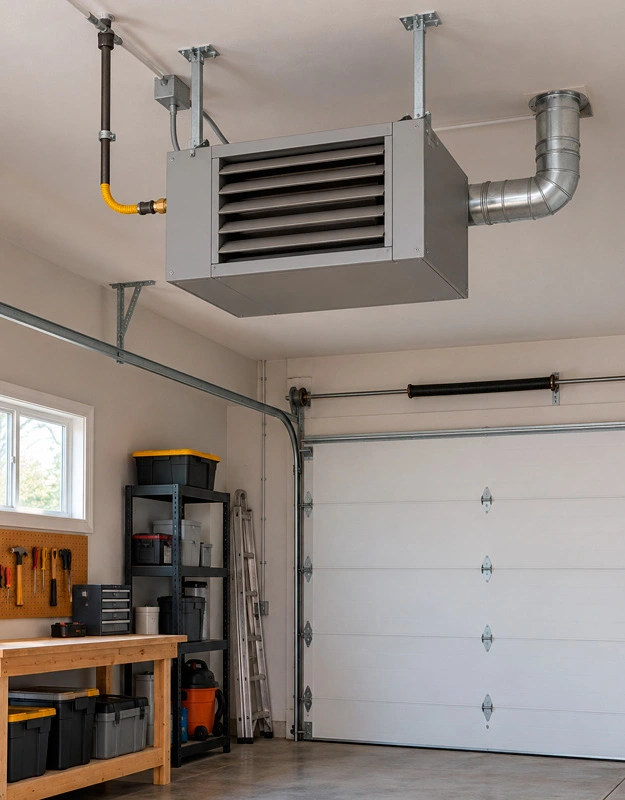
The practical choice is often decided by what the property can support. A nearby gas appliance does not prove that its supply can serve another load, while an empty electrical-panel space does not establish sufficient electrical capacity. Before a garage heater install is scheduled, those details need to be checked against the proposed equipment.
The way you use the space matters as well. Warming an entire detached garage throughout the day is a different task from making one work area comfortable for occasional use. Compare the following options with both the building and your routine in mind.
Forced-Air Gas Garage Heaters
A gas unit heater warms air and moves it across the garage with a fan. It can be an option where suitable fuel supply, electrical power, mounting support, and an approved vent route are available. Gas garage heater installation brings those requirements together; the appliance itself is only one part of the job.
The proposed fuel connection must account for the demand of other appliances using the same supply. Venting, combustion air, thermostat placement, and clearance around the unit also need to match the model’s instructions and applicable requirements. A location that is convenient for piping may still be unsuitable for airflow or service.
In the Denver area, elevation can affect the setup of fuel-burning equipment. The selected manufacturer’s altitude instructions should be followed rather than assuming that the factory configuration suits every property. Required adjustments depend on the specific heater and installation conditions.
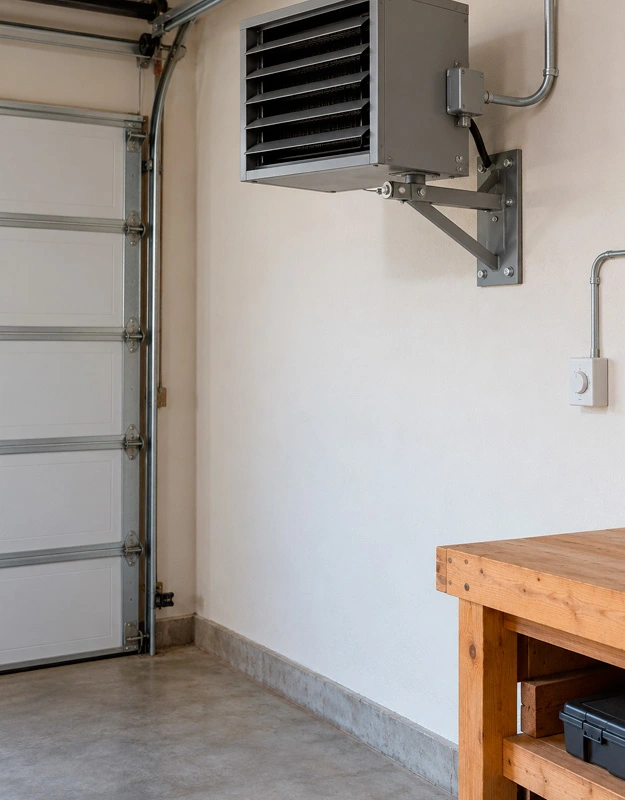
Hardwired Electric Garage Heaters (240V)
Homeowners who want to install an electric garage heater should begin with the proposed electrical load. A permanently wired 240V resistance heater needs a suitable circuit and connection arrangement, with available capacity assessed alongside the building’s other electrical demands.
Electric resistance heating does not require a combustion exhaust vent or fuel piping at the appliance. That can simplify some layouts, but electrical work may still be substantial where the existing supply is limited. The absence of a flue does not remove mounting, clearance, or service-access requirements.
Compare operating costs using the expected heating hours and your electricity rate. A garage used for brief weekend sessions presents a different cost pattern from one maintained at a high temperature all winter. Equipment price alone cannot establish which option will be economical for your routine.
Radiant and Infrared Garage Heaters
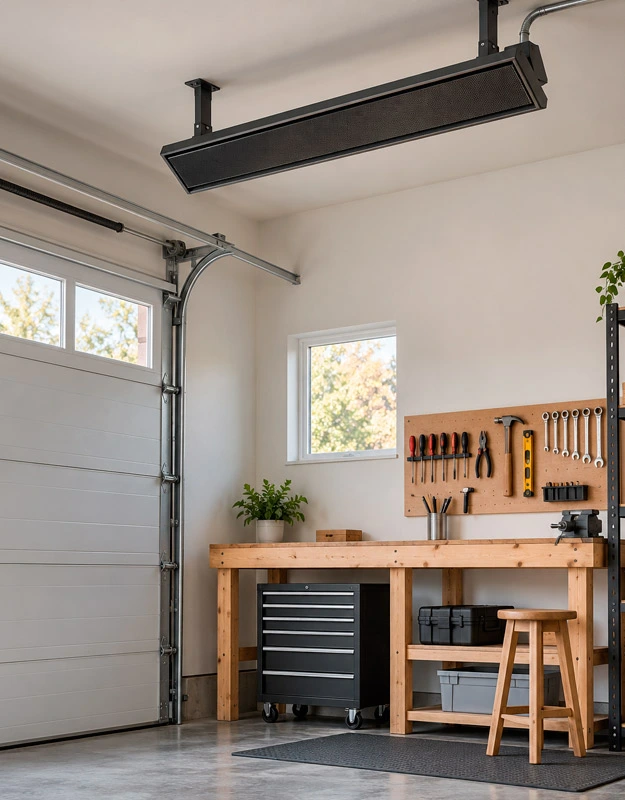
Radiant equipment directs energy toward people and surfaces within its effective coverage area. This may be worth considering where the goal is comfort around a defined work location rather than uniform air temperature throughout a large space. Radiant garage heater installation requires careful attention to the occupied area and the objects around it.
Coverage, mounting height, and required clearances vary by model. A vehicle, raised garage door, shelving unit, or stored item can affect whether a proposed location remains suitable in everyday use. The installation must accommodate what occupies the space when the garage is working normally.
Radiant describes the heat-delivery method, not necessarily the fuel source. Electric and fuel-burning designs have different connection and ventilation requirements. The selected product must be suitable for the intended residential garage application; products cannot be treated as interchangeable simply because they are described as infrared.
Garage Heater Installation Cost
Your garage heater installation cost depends on the route from the available utilities to a compliant, usable finished installation. Two identical heaters can require very different work when one garage has suitable connections nearby and another needs new infrastructure across the property.
Ask for an estimate that distinguishes the following items:
- Equipment selection based on heat loss, intended operating temperature, ceiling height, insulation, and the way the garage doors are used.
- Fuel piping and venting for the selected gas equipment, or the electrical work established for a hardwired electric heater.
- Supports and placement work, including any measures needed to preserve required clearances and avoid interference with doors or stored vehicles.
- Controls and wiring, with thermostat arrangements appropriate to the heater and the conditions in the garage.
- Required permits, inspection coordination, startup testing, and any identified finishing work included in the project.
Clarify whether connection work is included in the heater price or appears as a separate trade item. Also identify any assumptions about concealed conditions, access, or existing utility capacity. A written scope is more useful than a price that leaves those decisions until installation day.
The building condition influences future expense as well as equipment size. A professional heat-loss assessment considers the walls, roof, doors, windows, and insulation rather than relying on floor area alone. If improvements are planned, discuss their timing before the heater is selected.
Why Choose Best Heating Cooling & Air
Best Heating Cooling & Air provides HVAC installation, repair, and maintenance for Denver-area customers. Our licensed and insured company gives homeowners a local contact for discussing their garage project alongside related heating needs.
When comparing garage heater installers, ask how the equipment recommendation accounts for your building and working layout. The proposal should identify the unit, its location, the necessary connections, and how the completed installation will be checked. Those details let you evaluate the project beyond its equipment brand.
Bring photographs or plans if the garage has unusual door tracks, overhead storage, or restricted access. Explain how vehicles and work areas are arranged when the space is occupied. We can discuss the assessment and scheduling, including after-hours service availability for requests that need attention outside normal hours.
Schedule Your Garage Heater Installation Today
Contact Best Heating Cooling & Air before purchasing a heater around an assumed mounting location. If you want to install a gas heater in a garage, share what you know about the existing fuel supply and the building layout. For an electric option, mention other substantial electrical equipment already serving the property.
Request an assessment and written estimate covering the proposed heater, connection work, controls, and relevant approvals. With that information, you can plan the installation around the way you intend to use the garage.
Frequently Asked Questions About Garage Heater Installation
Can I install a gas line and garage heater myself?
If you are asking, “Can you install a garage heater yourself?” distinguish selecting a location from performing the installation. Gas piping, electrical connections, venting, and appliance setup require the relevant knowledge and compliance with the equipment instructions. Professional installation is the appropriate choice for this work.
Homeowner permitting provisions vary by jurisdiction and may involve eligibility conditions or examinations. They do not remove technical requirements or override manufacturer instructions. Before doing any work, confirm the applicable approval route and arrange qualified help for the installation.
Where is the best place to mount a heater in a garage?
To answer “Where is the best place to install a garage heater?” consider the occupied workspace, door movement, vehicles, and available connection routes together. The location must meet the selected unit’s clearance and mounting requirements while allowing suitable heat distribution.
Include overhead racks, open doors, and tall vehicles in the layout review. Leave the required access for future maintenance, and position the thermostat where it can sense representative conditions rather than a direct hot-air stream. The best location is specific to the heater and garage, rather than one universal corner.
Do I need permits and inspections for garage heater installation?
Permit and inspection requirements depend on the local authority and the work being performed. A project may involve mechanical, electrical, or fuel-gas approvals, so these should be identified before installation starts.
There is no universal answer to “How many inspections does it take to install a garage heater?” New concealed connections and other supporting work may affect the required sequence. Confirm who will obtain the permits, arrange inspections, and provide the relevant completion records as part of the agreed project.
Professional Garage Heater Installation Areas We Serve
Testimonials
Reviews About us on Google My Business

Best HVAC Company in Colorado

Professional Workers

License & Insured
List of service offered by Best Heating Cooling & Air
Best Heating Cooling & Air licensed, insured, NATE certified. As a Trade Partner we are able to provide for our customers rebate program for new installations.