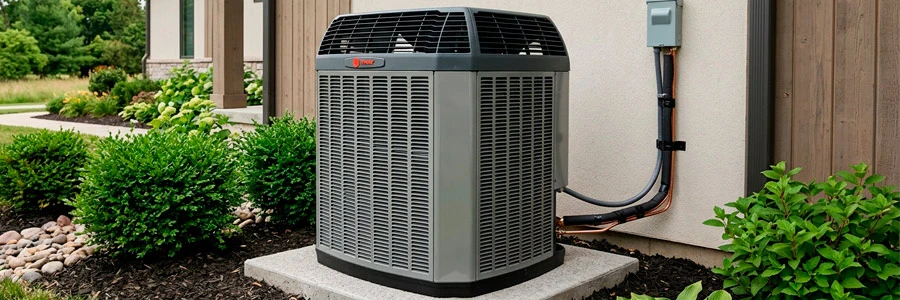
Cooling a home along the Colorado Front Range presents distinct thermodynamic challenges. Thin mountain air holds less mass per cubic foot, intense solar radiation bakes western-facing rooms, and afternoon outdoor temperatures regularly swing thirty degrees before sunset. Slapping an oversized, mismatched condensing unit onto your outdoor pad will spike your summer electrical bills, leave upper levels stifling hot, and burn out contactors before the warranty period wraps up.
Choosing the right cooling hardware comes down to matching compressor staging, airflow delivery, and sound profiles to your specific living layout. This guide breaks down the flagship Trane residential lineup—from the durable XR workhorses to variable-speed XV systems—so you can invest in equipment engineered for your comfort and Colorado’s climate.
Understanding Compressor Engineering: Single-Stage vs. Two-Stage vs. Variable-Speed
Trane builds systems across three distinct mechanical platforms. The motor and pump design inside the condenser determines how smoothly your system manages indoor heat and humidity:
- Single-Stage (Trane XR Series): The compressor operates like a simple light switch—either 100% off or 100% on. When indoor temperatures rise past the thermostat setpoint, the system fires at full blast until the call satisfies. While exceptionally rugged and budget-friendly upfront, single-stage units create noticeable temperature swings between cycles and draw heavy inrush current on every startup.
- Two-Stage (Trane XL Series): These units run on a low output setting (roughly 70% capacity) during mild summer afternoons, kicking into high gear only during triple-digit heatwaves. Longer, lower-intensity run cycles circulate air continuously, preventing hot air from pooling near your second-floor ceilings.
- Variable-Speed Inverter (Trane XV Series): The compressor modulates anywhere from 25% to 100% capacity in 1/10th of 1% increments. By continuously adjusting refrigerant mass flow to mirror the exact heat load entering through your windows and attic, an XV system maintains a rock-solid temperature flatline while pulling a fraction of the electricity drawn by legacy equipment.
Trane AC Lineup Breakdown for Colorado Homes
Trane XR14 and XR16: Budget Reliability for Starter Homes and Rentals
If your ductwork runs through a compact, single-story ranch or you manage a rental property where minimal maintenance overhead is the priority, the XR series delivers bulletproof mechanical reliability. Equipped with Trane’s proprietary Climatuff scroll compressor and Spine Fin aluminum outdoor coils, these single-stage units resist hail damage and corrosion far better than standard copper-tube, aluminum-fin designs.
- Delivers up to 17 SEER2 efficiency when matched with an approved high-efficiency indoor air handler or furnace coil.
- Ideal for tight budgets where straightforward, mechanical-switch simplicity is preferred over complex communicating electronics.
- Operational sound levels average 71 to 74 decibels—noticeable if placed directly outside a bedroom window, but completely tolerable near a garage alley.
Trane XL17i: The Balanced Performer for Multi-Story Layouts
Multi-story Colorado homes notoriously suffer from hot second-floor bedrooms while finished basements feel like meat lockers. The two-stage XL17i directly attacks this split by staying on low stage up to 80% of the cooling season.
- Longer runtimes push air slowly through long supply duct runs, evening out thermal stratification without freezing out the lower levels.
- Features a weather-resistant WeatherGuard top that stops falling pine needles, snowpacks, and windblown spring debris from landing directly inside the condenser fan motor housing.
- Operates around 72 decibels, providing balanced comfort and solid energy savings without the premium price tag of full inverter electronics.
Trane XV18 and XV20i: Maximum Efficiency and Whisper-Quiet Comfort
For large custom homes, open-concept floor plans, or properties equipped with rooftop solar systems looking to minimize kilowatt-hour draws, the communicating XV platform represents top-tier HVAC engineering. Pairing an XV system with an indoor ECM blower motor dynamically wrings heat out of living spaces while operating so quietly you have to look at the fan blades to know it is running.
- Reaches up to 21.5 SEER2, dramatically slashing utility bills during peak afternoon time-of-use pricing windows.
- Sound ratings dip as low as 55 decibels—quieter than a normal indoor conversation—making it the premier choice for outdoor patios, decks, and zero-lot-line suburban properties.
- Communicating controls continuously self-monitor system pressures, superheat, and subcooling, fine-tuning output to prevent coil icing during rapid weather transitions.
Crucial Installation Factors in High-Altitude Colorado
Selecting the right badge on the outside unit is only half the battle. High-elevation mechanical performance requires specialized installation calibrations that off-the-shelf sizing calculators completely overlook:
- High-Altitude Air Density Correction: Because air density at 5,000+ feet drops by roughly 15% to 20%, an indoor evaporator coil passes less mass over its aluminum fins at standard CFM blower settings. An inexperienced installer will leave an uncalibrated system starving for airflow, dropping suction pressures until the suction line frosts and slugs liquid refrigerant back into the compressor.
- Static Pressure and Filtration Restrictions: Throwing a dense MERV 13 filter into a return cabinet not engineered for that static drop restricts airflow, mimicking an undersized system. High-performance Trane units must have total external static pressure (TESP) measured across the supply and return plenums using a digital manometer before sign-off.
- Line Set Sizing and Oil Return: When running refrigerant piping long distances or up through multi-story chases, copper line diameters must match Trane technical specs down to the millimeter to ensure compressor lubricating oil returns reliably rather than pooling in low elbows.
Homeowner Checklist: Maintenance vs. Professional Service
Keeping a premium air conditioning system operating at its factory-rated SEER2 efficiency requires clear boundaries between seasonal maintenance and certified technical labor.
What Homeowners Can Handle (DIY):
- Clearing Vegetation and Clearance Zones: Maintain at least 24 inches of open clearance around the perimeter of the outdoor condensing unit. Trim back ornamental shrubs, weeds, and tall grass that choke incoming airflow through the Spine Fin coil.
- Filter Changeouts: Swap out 1-inch pleated filters every 30 to 60 days, or inspect 4- to 5-inch media cabinets twice a season, especially during dry spring winds and late-summer wildfire smoke events.
- Thermostat Optimization: Set steady seasonal schedules and verify that indoor supply vents and return grilles remain unobstructed by heavy furniture, area rugs, or draperies.
When to Call a Licensed HVAC Technician:
- Precision Refrigerant Verification: Modern systems running R-410A or next-generation lower-GWP refrigerants require charging adjustments calculated by liquid line temperature, target subcooling, and indoor wet-bulb metrics—never rule-of-thumb pressure gauges.
- Electrical Diagnostics: Testing dual-run capacitors under load, inspecting contactor points for pitting, and measuring operating compressor amp draws (RLA) against manufacturer ratings require specialized electrical meters.
- Deep Coil Cleansing: Washing Trane Spine Fin all-aluminum coils requires specialized non-acidic foaming detergents and low-pressure flushing. High-pressure pressure washers will bend internal aluminum spines, permanently ruining heat transfer capabilities.
Frequently Asked Questions
How long does a Trane air conditioner typically last in Colorado?
With annual professional maintenance and regular filter changeouts, a residential Trane condensing unit typically delivers 15 to 20 years of reliable service. The dry mountain climate prevents external cabinet rust, but high-altitude UV rays and windblown dirt mean coil cleanings and electrical checks are vital to achieving that full lifespan.
Is the XV variable-speed system worth the extra cost over an XR model?
If you plan to stay in your home for five years or more, have a multi-level layout, or value whisper-quiet outdoor operation, the XV series is well worth the investment. It eliminates second-story hot spots, integrates seamlessly with solar panels to lower net consumption, and maximizes comfort by running continuously at low wattage.
Will a larger ton AC unit cool my home faster and better?
No. Oversizing an air conditioner is one of the most destructive mistakes an installer can make. An oversized unit cools rooms too quickly, short-cycling on and off without running long enough to balance temperatures across different rooms. This constant starting and stopping spikes electric bills and rapidly burns out motors.
Do I need to replace my indoor furnace or air handler when buying a new Trane AC?
In most cases, yes. High SEER2 ratings are achieved by matching the outdoor unit with an engineered indoor evaporator coil and a variable-speed ECM blower motor inside the furnace. Pairing a new Trane condenser with an aging, single-speed blower will bottleneck system efficiency, void manufacturer ratings, and risk chronic coil-freeze issues.
Find the Perfect Trane Cooling Match with BHCA
Every home presents unique duct configurations, exposure angles, and insulation levels. Guessing your equipment sizing leads to noisy operation, hot spots, and inflated cooling bills. The licensed technicians at BHCA conduct comprehensive Manual J load calculations to determine exactly which Trane air conditioner fits your home’s square footage, lifestyle, and budget.
Ready to upgrade to dependable, high-efficiency home cooling? Contact Best Heating Cooling & Air today to schedule a home consultation and get an upfront, expert estimate on a new Trane system.