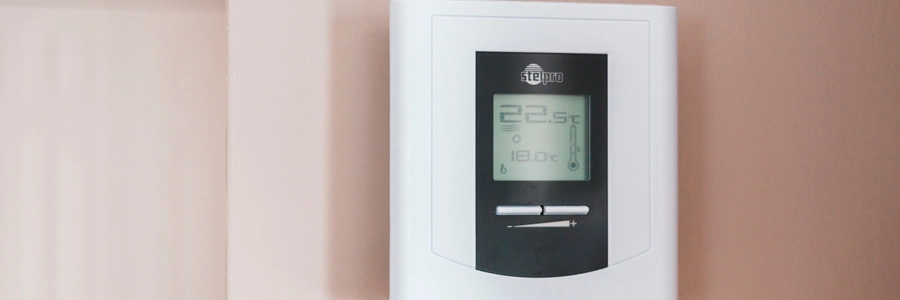
Every winter across the Front Range, furnaces fight freezing sub-zero drafts, only to cycle hard against high-altitude summer sun months later. When your HVAC system runs on a rigid, manual schedule, it burns fuel and electricity conditioning an empty house. A smart thermostat fixes this financial bleed not by working magic, but by eliminating runtime waste, syncing runtime with utility peak-demand pricing, and protecting multi-stage equipment from premature failure.
According to field data from thousands of residential systems, properly configured smart thermostats shave 10% to 15% off heating and cooling utility costs. Here is an engineer’s breakdown of the mechanical and operational physics that turn intelligent setpoint adjustments into tangible monthly savings.
The Physics of HVAC Savings: How Smart Thermostats Cut Utility Bills
A standard single-stage air conditioner or furnace runs at 100% capacity whenever the contactor pulls in. Leaving that system running standard setpoints while you sit in I-25 traffic wastes kilowatt-hours and cubic feet of natural gas. Smart controls stop that cycle through precise mechanical management:
- Dynamic Setback Thermal Decay: Homes lose heat in winter and gain heat in summer proportional to the difference between indoor and outdoor temperatures (ΔT). By letting indoor temps drift 7° to 10°F during unoccupied hours, heat transfer through your building envelope slows down dramatically, reducing total BTUs required over a 24-hour cycle.
- Optimized Recovery Algorithms: Old programmable models slam auxiliary heat strips (pulling an expensive 5 to 10 kW of electric resistance) the moment you ask for a rapid 5-degree temperature jump. Smart units calculate the exact thermal ramp rate of your structure, starting the heat pump or burner early enough to avoid high-cost backup heat entirely.
- Time-of-Use (TOU) Rate Arbitrage: Colorado utilities charge significantly higher rates during late afternoon and early evening peak-demand blocks. Smart thermostats pre-cool or pre-heat living spaces before peak pricing kicks in, coasting through expensive hours on residual thermal mass.
Advanced Automation Features That Lower Real-World Operating Costs
Geofencing vs. Static Scheduling
Static programmable schedules fail because real life rarely runs on a timer. If you stay late at work, a standard thermostat heats an empty living room for hours. Smart platforms leverage smartphone geofencing to establish a dynamic perimeter around your property:
- Automated Departure Mode: As soon as the last registered phone crosses your virtual perimeter, the system switches to energy-saving eco-bands without requiring manual intervention.
- Proximity-Triggered Conditioning: When you head home, the system calculates travel time and outdoor ambient air temperature, bringing supply air temperatures up to comfort targets just as you unlock the front door.
Remote Multi-Sensor Balancing
Most traditional thermostats sit in a central hallway, reading air temperatures that bear no resemblance to a hot upstairs master bedroom or a frigid basement den. This discrepancy causes homeowners to crank setpoints down to 68°F just to sleep comfortably upstairs, freezing the main floor and running the compressor into excessive amp draws.
Remote room sensors average temperature readings across occupied rooms or transfer system priority to where you actually spend your time. This prevents overcooling unneeded zones and keeps system run cycles shorter and more efficient.
Equipment Longevity: The Hidden Savings Beyond the Monthly Bill
Direct utility savings are only half the picture. The largest expense in home comfort is replacing a burned-out scroll compressor or a cracked heat exchanger. Smart thermostats actively protect capital equipment in three specific ways:
- Elimination of Short-Cycling: Turning an induction blower motor and compressor on and off every eight minutes draws massive inrush current (LRA), spikes electrical bills, and cooks run capacitors. Smart controls enforce minimum run times and staging delays, keeping components running within nominal amp draw limits.
- System Health Diagnostics and Static Pressure Alerts: When pleated return filters load up with seasonal dust and pet dander, airflow drops and external static pressure spikes. Smart systems track run durations against temperature changes, alerting you to replace restrictive filters before the indoor evaporator coil freezes solid into a block of ice or high-limit switches trip on the furnace.
- Multi-Stage and Variable-Speed Modulation: Modern two-stage and inverter-driven compressors save significant power when cruising along at low output. Smart controls communicate directly with staging boards, keeping the system in low stage up to 80% of the season, where SEER2 efficiency metrics are highest.
DIY Setup vs. Licensed HVAC Installation: Avoiding Costly Wiring Mistakes
Smart thermostat packaging often advertises a “15-minute DIY installation.” While snapping faceplates onto drywall looks straightforward, control wiring presents real mechanical and electrical pitfalls that can damage expensive control boards.
What Homeowners Can Handle (DIY):
- Connecting the thermostat to local 2.4 GHz Wi-Fi networks and pairing smartphone apps.
- Inputting daily routine schedules, setting occupancy geofence radiuses, and pairing wireless room sensors.
- Setting conservative high/low temperature bounds to protect indoor plumbing during deep winter freezes.
When to Call a Licensed HVAC Technician:
- Missing Common (“C”) Wire: Smart thermostats require steady 24VAC power to operate Wi-Fi radios and backlights. Running without a dedicated C-wire or misusing “power-stealing” adapters can cause contactor chattering, intermittent furnace shutdowns, and fried 24V control transformers.
- Dual-Fuel and Heat Pump Staging Configuration: If your system pairs an electric outdoor heat pump with a natural gas backup furnace, incorrect software configuration will fire both simultaneously, spiking high-side head pressures and blowing the compressor.
- Communicating Inverter Systems: High-efficiency variable-speed systems utilize digital serial buses rather than traditional 24V relay closures (R, W, Y, G). Installing an off-the-shelf retail thermostat on these systems strips away modulating capabilities, downgrading an expensive high-SEER unit into a basic single-stage machine.
Frequently Asked Questions
How long does it take for a smart thermostat to pay for itself?
Most Colorado homeowners see full return on investment within 10 to 18 months. With average savings between $120 and $180 per year on heating and cooling, plus one-time rebates often available through local utilities (like Xcel Energy), a quality thermostat upgrade pays for itself faster than almost any other home energy improvement.
Can a smart thermostat damage my furnace or air conditioner?
Yes, if wired or configured incorrectly. “Power-stealing” configurations lacking a true common wire can send low-voltage pulses through the gas valve or relay coil, causing rapid cycling. Incorrect staging settings can also lock multi-stage units in high gear or trigger emergency heat prematurely, inflating bills rather than reducing them.
Will a smart thermostat still work if my home internet drops?
Yes. The thermostat retains its internal schedule, staging parameters, and safety bounds directly in onboard memory. You will temporarily lose app-based adjustments and live weather forecasting updates, but heating and cooling cycles run uninterrupted until connectivity restores.
Does lowering my setpoint by one degree really make a measurable difference?
In heating mode, every degree you drop your average setpoint over an eight-hour stretch cuts baseline fuel usage by approximately 1% to 2%. Over an entire heating season across the cold Colorado plains, a disciplined 3-to-4-degree setback schedule consistently yields double-digit percentage drops in natural gas consumption.
Maximize Your HVAC Efficiency with BHCA
Purchasing an advanced thermostat is step one; dialing in blower speeds, balancing duct pressures, and matching staging profiles to your specific equipment ensures those savings actually show up on your monthly statement. The licensed technicians at BHCA calibrate your controls for peak efficiency, complete proper common-wire runs, and make sure your system delivers reliable comfort throughout the unpredictable Colorado seasons.
Ready to cut your heating and cooling costs? Contact Best Heating Cooling & Air today to schedule a professional smart control installation and system efficiency tune-up.