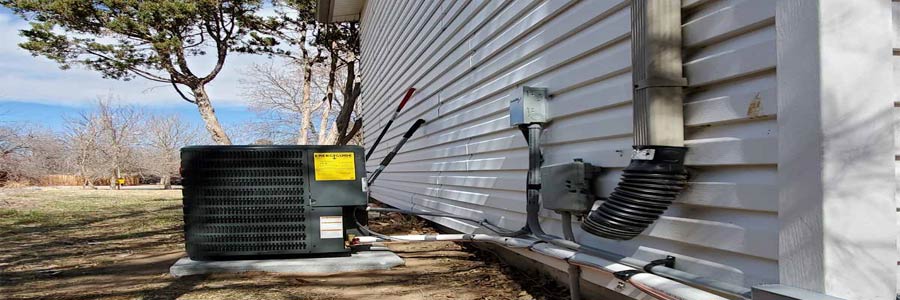
The summer heat in Colorado can be a serious test for your climate control equipment. To ensure your home remains an oasis of coolness even on the hottest days, your air conditioner needs proper care. Timely preventative maintenance helps avoid unexpected breakdowns, guarantees the stable operation of all components, and extends the overall lifespan of expensive equipment.
5 Crucial Tips to Get Your HVAC Ready for the Heat
Advance preparation is the best way to protect yourself from emergency air conditioner shutdowns at peak temperatures. Simple and effective hvac tips for summer will help you independently set your equipment to the correct working mode and create a pleasant microclimate in your living spaces. The right approach includes a few basic care steps for both indoor and outdoor modules.
1. Stay on Top of Your HVAC Air Filter Replacement
Timely maintenance of the filtering elements is the simplest yet most critical step in caring for your equipment. Regular hvac air filter replacement allows you to maintain high airflow capacity throughout the ventilation system. It also protects internal components from dirt buildup.
How a Blocked Filter Can Tank Your HVAC Performance
A clogged and dirty hvac filter sharply reduces the overall efficiency of a split system. Due to a weak airflow, the evaporator coil of the indoor unit cannot properly transfer cold, leading to the following negative consequences:
- Evaporator coil freezing;
- System lockouts;
- Excessive energy consumption.
Timely removal of old, contaminated elements eliminates these hidden threats and guarantees stable equipment operation.
2. Keep the Area Around Your Outdoor Condenser Clear
High-quality cleaning outdoor hvac unit includes removing dry branches, fallen leaves, poplar fluff, and stuck dirt from the metal fins of the heat exchanger. This provides a number of advantages:
- Improved heat exchange;
- Reduced wear and tear.
Timely cleaning of the outdoor loop eliminates the accumulation of combustible debris inside the housing. This is critical for the fire safety of the entire building, especially during the dry and hot Colorado summers.
The Role of Proper Airflow in Your Outdoor Unit’s Efficiency
Any obstacles around the outdoor hvac unit disrupt the natural circulation of air masses, forcing the fan to operate under excessive resistance. A lack of ventilation in the outdoor module leads to dangerous technological malfunctions:
- Operating pressure rises sharply inside the freon line, overloading the connecting fittings;
- Built-in safety sensors lock out the system due to critical loads on the compressor;
- The air conditioner begins to consume maximum power but delivers much less cooling to the rooms.
Ensuring a free clearance zone with a radius of at least half a meter around the unit guarantees easy “breathing” for the system and prevents unforeseen breakdowns.
3. Don’t Ignore the Condensate Drain Line Maintenance
Regular hvac condensate drain cleaning helps restore the free outflow of water and prevents fluid stagnation in the pan. This offers several benefits:
- Thorough cleaning of the line completely removes bacterial colonies, slime, and accumulated road dust;
- Timely care eliminates the slightest risk of technical water overflowing the edges of the pan directly onto your walls and expensive flooring.
Preventative flushing of the line with special disinfecting solutions guarantees that the moisture drainage system will handle the increased loads at the peak of summer heat.
Moisture Issues and Risks Caused by a Clogged Drain Line
A disruption in moisture drainage inevitably leads to the appearance of the following serious problems:
- Dampness in the room;
- Unpleasant odors;
- Mold growth.
As a result, a faulty drain line turns the climate control system from a source of comfort into a health threat for the entire family. To prevent the appearance of dampness and dangerous microorganisms, the drain loop must be cleaned before the start of each warm season.
4. Test Vents and Verify Thermostat Settings Early On
Proper adjustment of the control electronics allows for a significant reduction in the load on mechanical components. A comfortable thermostat setting for summer during hot days is around 25°C. This provides several advantages:
- Resource savings. Setting the temperature too low forces the system to run continuously at its absolute limit.
- Automation. Using programmable or smart models allows you to automatically raise the temperature during periods when you are away.
Before the season starts, also make sure that all supply vents in the rooms are completely open and not blocked by heavy furniture or curtains. This will restore the correct pressure balance and ensure an even distribution of cooled air throughout the house.
5. Look Over Your Refrigerant Lines and Pipe Insulation
The copper tubes connecting the indoor and outdoor units are responsible for refrigerant circulation. A visual inspection of the hvac refrigerant lines allows you to notice signs of oil streaks on time, indicating a potential depressurization and freon leak. This ensures:
- Cold preservation. Intact thermal insulation protects the tubes from being heated by outdoor air and eliminates condensation.
- Stable pressure. The absence of dents and kinks on the copper lines ensures proper circulation of the working substance.
Timely replacement of protective insulation jackets on outdoor sections allows you to maintain the maximum efficiency of your split system.
Why Investing in a Professional HVAC Tune-Up Pays Off
By ordering an hvac tune up service, you trust complex diagnostics to experts who will check the compressor’s startup currents, measure the exact freon pressure, and test all automated circuits. The benefits of turning to professionals include:
- Accurate measurements. Technicians use professional manifold gauges to find micro-leaks of refrigerant.
- Deep disinfection. The use of special antibacterial solutions and UV treatment completely destroys pathogenic flora inside the air conditioner.
This approach makes it possible to find hidden defects at an early stage when fixing them requires minimal expense. A professional tune-up guarantees that the system will handle peak summer loads without unpleasant surprises and emergency shutdowns.
Checking the Status of Aging HVAC Units Before the Rush
If your split system has been serving you for over 10–15 years, regular care may not be enough to maintain comfort. An objective assessment of its condition and a timely decision on replacing old hvac system will protect you from constant spending on endless repairs of worn-out components.
Replacing an obsolete unit before the severe heat sets in allows you to calmly choose an appropriate model at a favorable price, avoiding summer queues for installation. Investing in equipment replacement will pay off fairly quickly through lower utility payments and reliable, trouble-free operation.
Schedule your professional HVAC tune-up today
Take care of the coolness in your home in advance without waiting for the exhausting summer heat and the high workload of service technicians. By submitting an application for an hvac summer tune up with Best Heating Cooling & Air, you trust your comfort to certified professionals with years of experience. We guarantee high-quality service, the use of original components, and complete tidiness after all procedures are finished.
Common FAQs on Pre-Summer HVAC Care & Servicing
What are the main benefits of expert HVAC care before summer?
Professional service your hvac before summer guarantees the safety of electrical components and prevents hidden breakdowns. A technician will thoroughly clean hard-to-reach elements, check the fan balance, and measure refrigerant levels, which cannot be done independently without special tools.
How frequently do I need to swap out filters during peak heat?
During periods of active use, the standard interval to summer replace hvac filter is once every 1 to 3 months. If you have standard mesh filters, furry pets live in the home, or outdoor dust levels are high, you should check their condition every few weeks.
Can routine service actually lower my summer cooling bills?
Yes, removing dense layers of dust from the fan impeller and condenser fins restores the engineered heat exchange. The compressor reaches the set temperature faster and cycles on less frequently, reducing energy consumption and lowering utility bills.
What causes an air conditioner to struggle with uneven cooling?
This problem is often related to a pressure imbalance in the ductwork, contaminated internal filters, or a freon leak. Gaps in the soft thermal insulation of the refrigerant lines can also be the cause.
How do I spot the signs that my cooling system needs upgrading?
The primary signs that you need to replace your hvac system include frequent and expensive compressor failures, loud constant noise during operation, and a sharp spike in electricity bills.