In the exhausting summer heat, there is nothing worse than discovering that completely warm air is blowing from your supply vents. The situation where an AC running but not cooling house happens extremely often. This is the primary signal that the system is idling, wasting expensive electricity, and in urgent need of a professional inspection. Such a malfunction not only deprives your home of comfort but also points to a hidden defect that, without prompt intervention, can completely destroy costly equipment components.
Interactive Quick-Check Checklist
Before panicking and calling an emergency crew, perform a basic visual inspection of your equipment using our list. Quite often, the problem of hidden overheating or setting glitches can be successfully resolved on your own in a couple of minutes without calling technicians.
Steps for DIY express AC diagnostics:
- Check the thermostat panel. Make sure the screen is set to “Cool” mode and the target temperature is at least 3-5 degrees lower than the current room temperature.
- Inspect the electrical panel. Carefully examine the circuit breakers – the outdoor compressor and the indoor unit often have separate breakers, and one of them might have tripped due to a power surge.
- Test airflow strength. Gently place your palm against the supply vent to evaluate the airflow force – check whether it blows too weakly, in surges, or comes out with normal strength but remains warm.
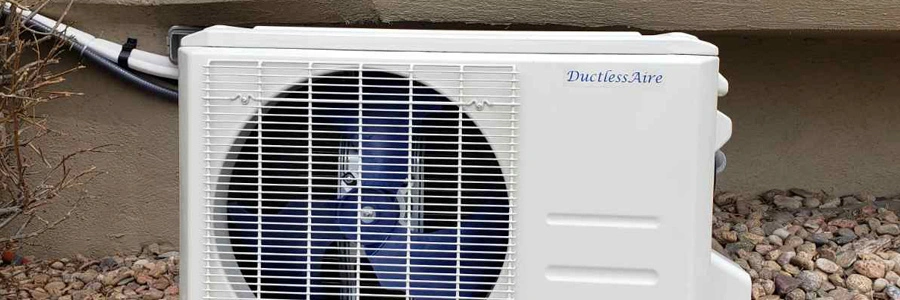
- Visually inspect the outdoor module. Check if the fan blades are spinning outside, ensure no branches are piled around the cabinet, and verify that the radiator is not clogged with a dense layer of cottonwood fluff, dust, or outdoor debris.
This simple yet effective algorithm for troubleshooting AC not cooling will help quickly localize the issue and rule out basic oversights. If all switches are in the correct position, the automation is on, and the settings are correct, but the long-awaited coolness still hasn’t appeared in the rooms, it’s time to move on to finding hidden technical causes and understanding how to fix AC in house not cooling.
Main Reasons Why Your AC Is Running But Failing to Cool
When modern climate control equipment is operating at full capacity but completely failing at its primary job, the root cause can lie in simple household dirt accumulation or a severe breakdown of key internal components.
Below are the detailed reasons for AC not cooling that our company’s certified technicians encounter most frequently on job sites.
1. Incorrect Thermostat Settings or Continuously Running Fan
Sometimes the root of a major issue lies in the incorrect position of a single button on the climate control panel. If your thermostat accidentally has the fan set to the continuous “ON” position instead of the automatic “AUTO” mode, you will experience a situation where the AC fan running but not cooling.
In this mode, the indoor fan will continuously circulate air through the house, even during moments when the outdoor compressor is temporarily resting and not cooling the refrigerant. During the outdoor unit’s rest periods, standard room-temperature air will blow from the vents, creating the illusion of a broken air conditioner.
2. Airflow Restriction Due to a Clogged Filter
A dense layer of gray dust, pet hair, and small fibers on the internal air filter acts like a solid wall. It completely blocks the free circulation of air masses within the system.
As a result, conditioned icy air simply cannot break through the dirt barrier into living spaces, and the climate system itself starts suffocating from air starvation, overheating, and working at its absolute technical limits.
3. Dirty or Debris-Blocked Outdoor Unit
The outdoor module containing the compressor is responsible for a critically important process – effectively discharging heat collected inside the home into the surrounding environment. That is why regular maintenance and timely cleaning outdoor HVAC unit are vital for the health of the entire system.
If the thin aluminum radiator fins are tightly packed with road dirt, dry autumn leaves, cobwebs, or pet hair, the heat transfer process breaks down entirely, the compressor overheats, and the system instantly loses its ability to cool the freon.
4. Evaporator Coil Freezing in the Indoor Unit
If during an inspection you suddenly notice that the AC evaporator coil is frozen (the copper evaporator coil is covered with a thick layer of ice, frost, or turned into a solid block of ice), this is a clear sign of an emergency malfunction.
A dense crust of ice completely blocks normal heat exchange between the refrigerant and the air. The air conditioner starts running nonstop for hours, but the air coming from the vents remains completely warm because the cold is trapped inside the ice coat.
5. Clogged Condensate Drain Line
During active room air cooling, the air conditioner inevitably removes excess moisture, which collects in drops on the drain pan. If the thin plastic drain tube becomes clogged with bacterial slime, dirt, or dust, water begins to pool inside the casing.
Modern safety systems immediately detect the threat of flooding and use a float switch to automatically block the outdoor compressor, leaving only the fan running. Furthermore, constant standing water in the drain pan makes it an ideal breeding ground for dangerous mold and harmful bacteria. Consequently, each time the unit is turned on, a persistent, unpleasant, and suffocating musty odor instantly spreads throughout the house.
6. Low Refrigerant Levels or System Freon Leaks
Freon is a specialized gas, the “blood” of any air conditioner, continuously circulating through copper lines and transferring heat energy from indoors to the outside. Dangerous factors like critically low refrigerant levels or hidden refrigerant leaks due to microcracks at pipe joints lead to a sharp drop in performance.
The air conditioner will hum hard and loudly for days on end, wasting your money, but the indoor room temperature won’t drop by a single degree.
7. Failed Start Capacitor or Electrical Issues
The start capacitor in the outdoor unit can be compared to a powerful battery that delivers a strong initial electrical boost to launch the heavy compressor and outdoor fan.
If this component burns out from extreme summer heat, constant overloads, or a sudden power surge in the grid, the indoor unit will continue operating, lighting up, and simulating cooling. However, the outdoor section of the system won’t even start. Without a running compressor, refrigerant stops circulating through the loop, and the indoor fan simply circulates uncooled, stuffy air, uselessly consuming electricity.
8. Damaged Ductwork and Cool Air Leaks
It happens that the air conditioner itself works perfectly, the compressor is healthy, and the freon is charged strictly to spec, but the icy air it prepares simply cannot physically reach your rooms.
The situation where an AC is running but not cooling is very often explained by hidden cracks, tears, poorly sealed joints, or deformed flexible ductwork in the attic, walls, or crawlspace. Through these damaged spots, all the cold air escapes to cool empty, uninhabited home structures. At the same time, outdoor hot air penetrates the system through those gaps, forcing the equipment to work under severe wear.
9. Incorrect Sizing or Severe AC Wear
The efficiency of climate control equipment directly depends on your home’s parameters. Proper sizing calculations are critical, as a mismatch between system capacity and room volume guarantees performance issues.
For example, a severely undersized air conditioner will work under wear 24/7 without stopping, yet still fail to cool a spacious home at the peak of summer heat. Conversely, an oversized air conditioner will constantly short-cycle and break down quickly from frequent startup stress. Additionally, an overly large unit cools the air too rapidly and shuts off before it can remove humidity, leaving rooms with stuffy dampness and causing you to overpay for electricity.
When to Stop Troubleshooting and Call a Professional
If you have already carefully cleaned all accessible household filters, rechecked the settings on the thermostat panel, and completely cleared the outdoor unit of stuck debris, but the frustrating issue where the air conditioner running but not cooling still persists, immediately disconnect the equipment from the power grid and call a technician.
Here are the main reasons why you should stop DIY troubleshooting and trust the professionals:
- Risk of completely burning out the compressor. Continued operation in an emergency mode will destroy the “heart” of your AC.
- High cost of major repairs. Replacing a burnt-out compressor is comparable in price to purchasing a brand-new climate control system.
- Need for specialized equipment. Locating microscopic freon leaks requires ultraviolet leak detectors and professional tools.
- Complexity of technical processes. Soldering copper lines, precise refrigerant charging by weight, and replacing circuit board components require professional skills.
Attempts to fix complex climate equipment components with your own hands without official licensing and tools often lead to even more severe breakdowns and voided warranties. Professional diagnostics allow technicians to quickly identify hidden defects, protect expensive system parts, and restore comfort to your home as quickly as possible.
Schedule Professional AC Diagnostics Right Now
Don’t endure the exhausting heat and stuffiness in your own home – trust your family’s comfort and safety only to experienced professionals. The Best Heating Cooling & Air team will promptly arrive at your location in any part of the city equipped with all necessary diagnostic tools.
We will quickly locate the hidden cause of the breakdown, fix the malfunction, top off the system with high-quality freon, and bring long-awaited coolness back to your home. We provide an official warranty on all completed repairs and installed replacement parts.